Claude For Marketing Strategy And Client Research
A durable agency guide to using Claude-style AI workflows for long-form research, positioning, and client strategy support.
Key takeaways
- Long-form AI workflows can help organize briefs, transcripts, and research notes.
- Strategy outputs should be structured as options, risks, and decisions, not generic summaries.
- Sensitive client data needs policy review before being used in any third-party AI tool.
Short answer: use long-form analysis to make strategy clearer
Claude-style workflows are useful for marketing strategy when the agency needs to process long inputs: discovery call transcripts, website copy, competitor notes, proposal drafts, customer reviews, and research documents. The goal is not to outsource strategy. The goal is to make messy information easier to reason about.
A strong prompt asks for decision support, not just a summary. For example: identify the strongest positioning options, list objections a buyer may have, compare the offer to competitors, and recommend questions the strategist should ask before finalizing the plan.
Turn research into client-ready decisions
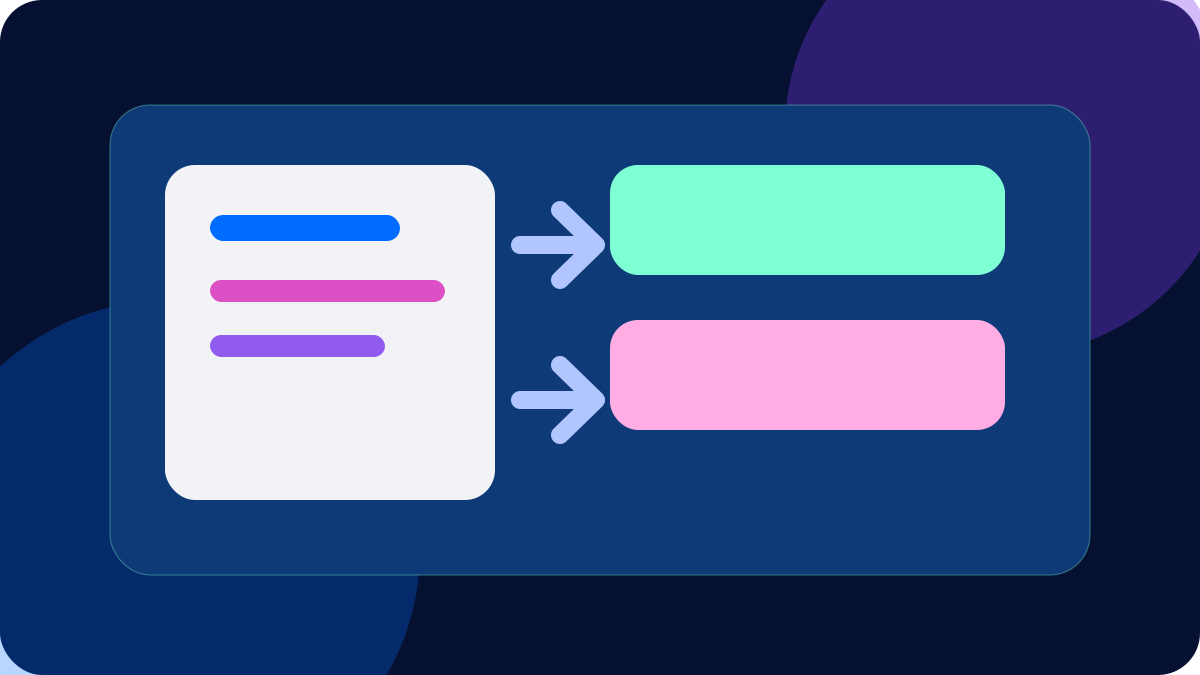
Clients do not need a long dump of raw notes. They need to understand what the agency learned and what should happen next. AI-assisted research should produce a decision memo with audience insight, offer angle, channel priority, content themes, proof gaps, and risks.
That structure helps the agency move from discovery to execution faster. It also makes client approval easier because the recommendation is connected to the evidence.
Strategy research output format
| Section | What it should answer | Why it matters |
|---|---|---|
| Audience pain | What problem is the buyer trying to solve? | Guides messaging and hooks |
| Offer fit | Why this offer is believable and useful | Improves positioning |
| Objections | What may stop the buyer from converting? | Improves FAQs and sales assets |
| Proof gap | What evidence is missing? | Guides case studies and testimonials |
Privacy and review rules matter
Before using private client material in any AI tool, agencies should review the client agreement, internal policy, and provider settings. Some data should be anonymized. Some data should stay out of third-party tools entirely.
The final strategy should always be reviewed by a human strategist. AI can organize inputs and suggest angles, but it does not understand client politics, budget constraints, brand risk, or market timing the way an experienced team does.
Frequently asked questions
Where can Claude-style tools help agencies?
They can help summarize long client inputs, organize research, compare positioning angles, and prepare strategy notes for human review.
Should agencies paste private client data into any AI tool?
Agencies should follow client agreements, privacy obligations, and provider settings before using sensitive client data in any third-party AI tool.
What makes AI research useful for clients?
Useful research connects audience pain points, offer positioning, campaign channels, objections, and next actions in a clear decision format.
Found this useful?
Contact sales and get ready to sell your AI stack.
See how GenStack helps agencies package, launch, and manage client-ready AI software offers.
Contact Sales